October is World Blindness Awareness Month, a time to raise awareness about vision loss and the solutions available to help individuals maintain their independence.
For people living with pathological myopia, also known as myopic degeneration, everyday activities like reading, recognizing faces, and watching television can become increasingly difficult.
Unlike ordinary nearsightedness, pathological myopia can cause changes to the retina that affect central vision, contrast sensitivity, and tolerance to glare. As the condition progresses, regular prescription glasses may no longer provide adequate clarity.
At Low Vision | BC, we help individuals throughout British Columbia make the most of their remaining vision through personalized assessments and specialized low vision glasses.
How Pathological Myopia Affects Daily Life
Pathological myopia can create several challenges, including:
- Difficulty Reading: Small print may appear blurry or distorted, even with prescription glasses.
- Reduced Contrast: Stairs, curbs, and changes in flooring may become harder to distinguish.
- Glare Sensitivity: Bright sunlight and indoor lighting can interfere with comfortable vision.
- Difficulty Recognizing Faces: Identifying people or seeing details from a distance may become challenging.
While conventional glasses cannot correct retinal damage, specialized low vision devices may help improve functional vision.
Customized Low Vision Glasses
At Low Vision | BC, we focus on finding optical solutions that address each patient’s individual needs and lifestyle.
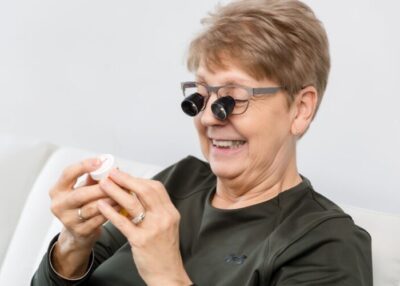
Microscopic Glasses: Provide additional magnification for close-up activities such as reading books, medication labels, and personal correspondence.
Bioptic Telescopic Glasses: Magnify distant objects and may help with activities such as watching television, recognizing faces, or viewing signs.
Specialized Filter Lenses: May reduce uncomfortable glare and improve perceived contrast in certain lighting conditions.
These devices cannot reverse vision loss, but they may help individuals use their remaining sight more effectively.
Maintaining Independence with Low Vision
Small changes can also make everyday activities easier. Improved task lighting, increased contrast around the home, and appropriate magnification may help individuals feel more comfortable completing daily tasks.
A personalized low vision assessment can identify which devices and strategies may be most beneficial.
At Low Vision | BC, our goal is to help patients continue enjoying the activities that matter most, whether that’s reading, spending time with loved ones, or pursuing favorite hobbies.
Frequently Asked Questions
Can low vision glasses help with pathological myopia?
Yes. Although they cannot repair retinal damage, specialized magnification and optical devices may help some individuals perform everyday activities more comfortably.
Why aren’t regular prescription glasses enough?
Traditional glasses correct focusing problems but cannot reverse structural damage to the retina. Low vision devices provide additional magnification or visual support.
Can specialized lenses reduce glare?
Certain filter lenses may improve visual comfort and contrast for some individuals. A low vision assessment can help determine which options are most suitable.
What happens during a low vision assessment?
A low vision optometrist evaluates your remaining functional vision, discusses your daily challenges, and explores specialized devices designed around your personal goals.
Discover What’s Possible with Low Vision | BC
Vision loss doesn’t have to mean giving up the activities you love.
This World Blindness Awareness Month, take the opportunity to explore how personalized low vision care may help you make the most of your remaining sight.
At Low Vision | BC, we’re committed to helping individuals throughout British Columbia find practical solutions that support greater confidence and independence.
Schedule your low vision consultation today:
Low vision devices do not cure pathological myopia or restore vision lost from retinal damage. Individual results vary.